Tuesday, 28 June 2011

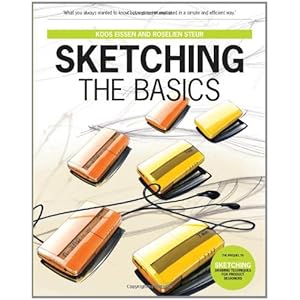
Good Books: Sketching The Basics

Part of the growing evolving artist, is to surround oneself with the right reference materials.

As such, books are the proverbial treasure to have at hand. This week, we would like to bring to notice this essential book on the basics of sketching. (what it also contains is a invaluable de facto book about design)

Check out Koos Eissen's : Sketching: The Basics !

Sunday, 19 June 2011

UK - Concept Artist Education

The path to be a concept artist is still generally in its infancy, primarily in UK.

As such there is not a full integrated entertainment design course set up to develop, train and graduate a artist to be a pro artist on graduation into the Game or Film industry.

//////// ALTERNATE CHOICES ////////

Thus, one has primarily two choices in UK.

  1. Illustration Course
  2. Animation Course
  3. Game Related Course

//////// ILLUSTRATION COURSES ////////

In general illustration courses are not equipped or mentally set up for conceptual art. They tend to run courses that are more "artsy", and looking to instill a sense of producing statements via their art or with the aim of being a book cover illustration.

This in itself is no bad thing, however it may not be what you signed up for.
A complementary strategy is to integrate alot of self study and self education about the digital arts, games industry and develop your own unique coursework to complement the illustration course.

A good illustration course can be advantageous, if it can impart the basic grounds of:
  1. Life drawing (allowing for full development of volumetric form, anatomy, line and sense of movement)
  2. Basics of drawing - perspective, form, movement
  3. Opportunity to educate in art history, be aware of various influences and deconstruction of art styles
  4. Opportunity to develop your own individualistic style and perfect the basics of painting
  5. Develop a good innate sense of colour and vibrancy
The disadvantages are:
  • Your degree is probably quite divergent from concept art, ad thus you might be fighting the system.
  • Your coursework and self development means all your time is maxed out, with less time on social experimentation. (if you can stick some of that 10000 hours of art skill points, this wil set you up for a good line of freelance work)

//////// ANIMATION COURSES ////////

Animation courses on the otherhand are more closely in tune with producing concept art.

Advantages are:

  • Upon graduation, you are ready to enter animation, film or games
  • You understand how to distill real life into a stylised form
  • A great understanding of colour and flat tones/shaders
  • A great understanding of movement, gesture, anatomy
Disadvantages are:

That alot of the great stuff you've learnt you have to partially unlearn or extend further, due to ingrained habit.
  • Your are is too stylised. This may require further self education to explore alternate methods of colour rendering and aesthetics
  • Your art is too stylised. You require further exploration to produce realistic looking contemporary artwork for FPS type games.
  • Your art is too stylised and your whole colour spectrum tends to be happy, vibrant and technicolour vs the more gloom laden desaturated moody pieces. This will require more experimentation.


RECOMMENDED UK COURSES


ALTERNATE UK COURSES
  • Abertay Game Design Course (dose not teach you to be a concept artist per se, but you learn a bit of everything)
  • Staffordshire University - GamesConceptsDesign course (teaches a mixture of 2D/3D/mattepainting to aim to develop games artists).  http://www.gamesconceptsdesign.com/
  • UCA Rochester - CG Arts & Animation. They have a good group blog that incentives the participants to think about art, sources of inspiration and accountability.
NOTE: please do write in to help share your experiences in the various UK courses, and we can compile this to provide a accurate experience and recommendation of UK related courses to be a Concept artist.

Saturday, 18 June 2011

Guest Post - Alex Tooth (Pt1 - Introductions!)

Hello!

Well, I thought rather than extensively plan out any super detailed and structured set of posts, I have decided to just jump in with a new post and write something.

I have kindly been invited to contribute to this blog by Koshime, he has been a great help on getting me started in the industry and I think this will be a good way to give something back to "future Me's"! What I mean by this is give any tips and helping hands to the complete beginner.

So where to start... firstly I guess a bit about who I am would be useful! Then I'll try to give a chronological account of how I got from A to B and my plans to get to C over the next few years. I'll try to spread it out over a few posts whenever I have a couple hours on a Sunday afternoon or something :)


//////// So, who am I ? ////////

I'm a freelance illustrator working in the gaming industry, this covers your tabletop games, collectable cards games, video games and anything similar. I work pretty much exclusively in Digital, though I have some pencil skills - really the bulk of my work is done on a PC with a Wacom Intuos4 tablet. I paint my images in Adobe Photoshop and I use a lot of Autodesk Maya for any 3D bits and pieces I might require.

I certainly class myself in illustration and not concept design. Though some of my work includes designing, I don't have as many aspirations of purely doing this for a living. The distinction for me is really the story-telling aspect of illustration, which I have found not as prevalent in concept work.

I have been taking professional jobs for around 6months now for companies including Catalyst game labs, doing some work on their Battletech line, also Fantasy Flight Games, Alderac Entertainment and most recently Privateer Press.

I only do work in the Fantasy and Sci-Fi genres right now, and have little interest in "real-world" illustration projects.


//////// So - how did I end up doing this kind of work? ////////

Now I know this is where 99/100 illustrators say they were drawing since their mum put a pencil in their hand at the age of 2. Well this really isn't true for me - honestly I rarely drew a single thing until I was 27. So my route into this may not be the usual one.

However I have been playing video games since I first got an Acorn Electron in 1986 or so. This went the typical route of NES, PC, SNES, PS1, PS2 and so on - I always knew the games industry would be where I'd end up career wise, in some shape or form.

Luckily, at school I could draw things easily and Art and Design were really the only subjects I could do in my game-geek adolescence. I ended up taking animation at Wolverhampton University - total waste of time, but Uni was the thing you used to do after school. I am not saying Uni is a bad thing, certainly not - and I will be writing about the benefits in a future post. As with most colleges, you either teach yourself something or fail - so I managed to learn some Maya4 from a good book and put together some 3D animations to get through the course. Nothing I could land a job with after Uni, BUT funilly enough it's a tool I still use to this day, 8years on.

So the 5-6 years following Uni, I did various "normal" jobs to get by, factory worker mainly, various shop assistants - I am sure many of you can identify with me here. I eventually ended up as a games tester for about 3 years, which I always heard was a "door" into the games industry. It's not by the way, so don't let people convince you otherwise! Really it's a bunch of 20-30 somethings playing games all day for a pretty much minimal wage - I won't lie though, it's a fun job and I am sure there's WAY worse things to do :)

Then one day around my 27th birthday, early 2008 I was looking around a local magazine shop and this one glossy magazine literally BEAMED "take meee!" this was of course ImagineFX magazine. So after flicking through for a little while, I was blown away, I didn't know what the hell I was looking at, where this imagery came from, who made it - all I knew is I liked what I saw, ALOT. If you're not aware of ImagineFX, it's a fantasy art magazine started in 2006, I'd recommend heading over too www.imaginefx.com and checking out what they do!

Discovering this Artwork and reading about the processes involved, seeing amateur works to uber pro stuff - finding out people were doing this stuff in their bedrooms on their home computer, no paintbrushes and canvasses, it really suddenly dawned on me "Hey I could be doing this!" - after a short while I gave up my job as a games tester, moved home and started learning about Art.


//////// Phew! OK, so you may be wondering why I just wrote all that? ////////

I wanted to make the point that anyone can do this, and that you don't need special degrees, mentors, extensive art training, drawing since a child, special talents or knowledge - I hadn't heard of Frank Frazetta or Wizards of the Coast until a couple of years ago! So I really hope some of you can get the extra boost of confidence after reading stories like these, that little push you needed to make a good decision about your future - remember life is short and it's never too late.

I am now just over 2 years after "picking up the pencil" and now making a living wage out of my Artwork. And over the course of my next few posts I want to share all the key moments, stages in the process and my plans for the future. It's not a complicated thing, and it's getting easier and easier everyday with the aid of blogs like these, forums and the wonderful, helpful, loving and constantly growing fantasy art community we have here online at our fingertips :)

I am really looking forward to sharing my experiences here and reading about others like me, just getting started with their Artwork.


//////// Study and Personal work 2009 ////////


//////// Personal work 2010 - featuring in "Expose 9" ////////


//////// Study and personal work 2011 ////////


Monday, 13 June 2011

Future Employment - Internships

Once you've made a reasonable commitment to be a artist within the digital arts industry, a large part and parcel as the artist is to improve one's chances of attractiveness for future employment by providing a good generalist skillset and a outstanding specialist skillset.

One way to obtain further education into the requirements of the everyday working environment of a games company or a animation/post production studio is to apply for a Internship or Runner job. Apprentiships do NOT exist due to lack of feasible methods of accreditation.

The Intern

Those seeking to be a visual arts intern should have realistic expectations prior to applying.

Realistic in that, a internship is seen as a finishing period, to finely hone the skills, art theory and knowledge accumulated thus far prior to graduating into a full professional artist, in a ultra competitive creative industry.

//////// WHY HIRE AN INTERN ////////

As such, companies looking to hire interns are looking for talents with great potential to be their next junior artist, someone fully mouldable (without the baggage and trained instincts of a existing artist, who may not be the full package due to deficiencies in their prior art skillset) who is able to grow into a full professional artist within the parameters set by the respective companies.

//////// BASIC SKILLSET REQUIRED ////////

Realistic, also in the sense, one should not apply if you are not wholly equipped with the basic minimum understanding and application of

1/ Perspective & Form
2/ Lighting & Shadow
3/ Colour
4/ Principles & application of Industrial Design
5/ Anatomy & Motion


For it is with a good grounding of the 5 tenets of the visual arts above, that one can truly train and hone a future intern as your next new junior artist.

//////// REAL WORLD  CONSIDERATIONS ////////

Please try to remember , that within the visual arts industry - one has to focus the creative forces into deliverable real quantitised assets.  Often there will be live projects being undertaken within the studio environment, and sometimes there might not be much margin for error, such is the real working practice environment.

Thus it is not a place to dabble in art, to learn about the basics of art (without the preceding groundwork) or any tomfoolery about the finesse of various subtle strokes that only a connoisseur of abstract fine arts can appreciate.

If you are prepared, and have a good basic grounding in art - your portfolio will stand out a mile above the rest of the applicants such that the prospects of employment are considerably higher during the internship or thereafter.

End - part 1

Getting a foot in the proverbial door
  • The Internship
  • The Runner
  • The Modder
  • The Small to Big Approach

Tuesday, 31 May 2011

Guest Authors

ARTISTS & ILLUSTRATORS  - Their story

In addition to reviews of various international universities, and online courses, we will help provide a broad guide via shared experiences of how each individual artist came into their own.

What will be quite obvious is, there is no set best pattern as to how we got here.

Each artist has his/her own unique tale to tell, and sometimes its a case of being in the right place, right time, right connection whereby the planetary alignment all comes together. But in the majority, it is often parallel tales of hard graft, and asking the right questions, and applying it in the best way possible to make their own choices and strategies work for themselves.

Afterall, one needs to have a strategy that works best for you and your unique individual artistic talents.

"The difference between the various artists, that makes them all unique is their sum total life experience and ideas"

Monday, 30 May 2011

Self Education Survival Guide - Part 1

Self Education, will stand you in good stead all life long as a artist, although if you have the financial means, perhaps a art education will help accelerate your path and thus be a worthy investment.

Nevertheless, let us look at Self Education as a viable creative means of the modern digital artist.
Especially if one enjoys the lifestyle of a truly mobile artist that can survive and paint anywhere, thus being able to enjoy roaming from say games to film to animation all offsite or onsite.

Also, one should note that there are essentially THREE types of artist towards which, the self educated route may differ in terms of education, continuing education and lifestyle
  1. The Illustrator
  2. The Concept/Animation Artist
  3. The Production Artist

MOTIVATION

In the internet age, a good friend said:
well to be honest... i don't think where you are locally makes a huge impact nowadays.... work hard, make good arts and put it online!
To this I would say:

The majority of work relies of the artist education themselves lifelong, and to a large extent this is good in a freelance capacity and building a reputation for themselves to the point they join a studio or continue their current course.

The slight drawback is, working in isolation can limit a artists growth and eventually they might feel the natural inclination to reach out to other local artists. There is a certain organic growth of bouncing off ideas, or even showing off a sketch to receive some sort of feedback from other artists that allows for a different mindset and perspective to kindle a artists growth.

DISCIPLINE

As a self educated artist, one needs to develop a disciplined routine.

You need to establish a "work space" that represents your studio, ensure adequate breaks and when work is all done, be able to step away from the work - to return to sociable non artistic activities.

Afterall, the artist is really the sum of their life experience. Thus to fill their ideas, imagination and creative juices, alternative everyday life stimulation is vital!

BUILD YOURSELF A PRESENCE

Common things being common, its no secret of how you get yourself a foot into the industry.
"work hard, make good arts and put it online!" seems to sum it all up in a nutshell. What this means essentially is.

//////// BUILD A VISUAL PORTFOLIO ////////
Without a basic stall to showcase your wares, no one can see the budding promise and talent that you are. With arts, its really straightforward - and there are multiple online websites to portray your works ranging from personal websites to online art communities eg. cghub

//////// Network ////////
Once you have your visual portfolio in place, do your best to go out there, meet fellow artists, participate in artistic communities and attend local/international events. This will not only educate you in the current pulse of the moment, but provide immeasurable first hand information about current trends, obtain invaluable artistic feedback and provide a firsthand social humanistic aspect that helps represents yourself as a artist.
People being people, love to work with reliable sociable creative talent and putting a name to a face means in the future, the relationship can work at both a personable and professional capacity.

The community itself is relatively modest to small, and with time you will find you bump into the same folk over and over again. Thus, all those initial choices add up and can help improve your career, or destroy a career depending on your work ethic, and choices.


//////// Can't Please Everyone ////////
Perhaps, one can only try your best.
Be professional at all times and make every art asset, art piece and project a lifelong learning experience. For it takes many years to build a solid reputation, but a instant to cast a long shadow of doubt.

Entertainment Design - Continuing Education

CONTINUING EDUCATION FOR THE DIGITAL ARTIST

With each cycle of artist entering the Entertainment Industry, the main challenge and most frequent questions are, which centres of higher education or courses are available throughout the UK and Internationally.

The thing to keep in mind is that good, accredited game or entertainment related design courses are overall in its infancy. Animation or Industrial Design of Illustration schools on the other hand are more established.

THE QUEST & PERPETUAL DREAM

Alot of folks want to be the next kick ass concept artist or digital illustrator, and self education in this respect is how most folks approach the industry, in terms of what options are available, how to improve one's artistic skillset, and how to get a foot in the industry.

In a nutshell, there is no one specific best approach to this, however hard graft and informed choices with a view that art is a lifelong lifestyle will stand you in good stead, should you continue down this path.

Thus, let us look at the various options available and perhaps help provide a more informed opinion.

  • Traditional centres of higher education
  • Online courses
  • Self Education


HIGHER EDUCATION STRATEGY GUIDE

A list of various educational centers and courses worldwide are available at the Higher Education course page list.

The main body of the strategy is really to help maximise one's time and plan how to be a concept artist, illustrator, production artist or 3D modeller.


FREELANCER STRATEGY

The main strategy for the canny upcoming artist is to ultimately get a name and reliable reputation for themselves prior to graduating, such that they literally walk into a job of their choosing - be it in games, motion pictures, visual effects or fine arts.

To achieve this, is relatively straightforward.
Hard graft - to ensure coursework is produced whilst you moonlight in parallel.

How you freelance on the side, is the ultimate challenge in

  1. Time management
  2. Efficiency
  3. Reliability
  4. Learning the tips/tricks of the trade that no school can teach save experience
Practically, a good way to build a portfolio and client list is via Card illustrations.

These can range from board games eg. Fantasy Flight, to card games eg. Art Order challenges, Magic the gathering, D&AD to game rule book illustrations eg. Sandstorm productions.

Once a few of these gigs are worked at, these should provide some good and bittersweet memories of managing work assets, invoicing, getting paid and staggering more work and so forth.

This now also provides a selectable range of images to use in the portfolio, to migrate and obtain book illustration or promotional illustrations for all sorts of merchandise.

If you choose to be a game concept artist, then I'd recommend along side, one should start learning the finer aspects of production art eg. producing weapons, character orthographic designs, environments, and transport which utilize the principles of solid product and industrial design.